
City trip Warsaw: energy between the Vistula and old streets


René Koenig
Founder & Owner of GERMENS artfashion
Warsaw feels awake. Some corners look polished, others feel raw, and the interesting part lives in between: people moving fast, streets that suddenly drop into courtyards, and that constant pull toward the Vistula as if the river were a reset button for the day.
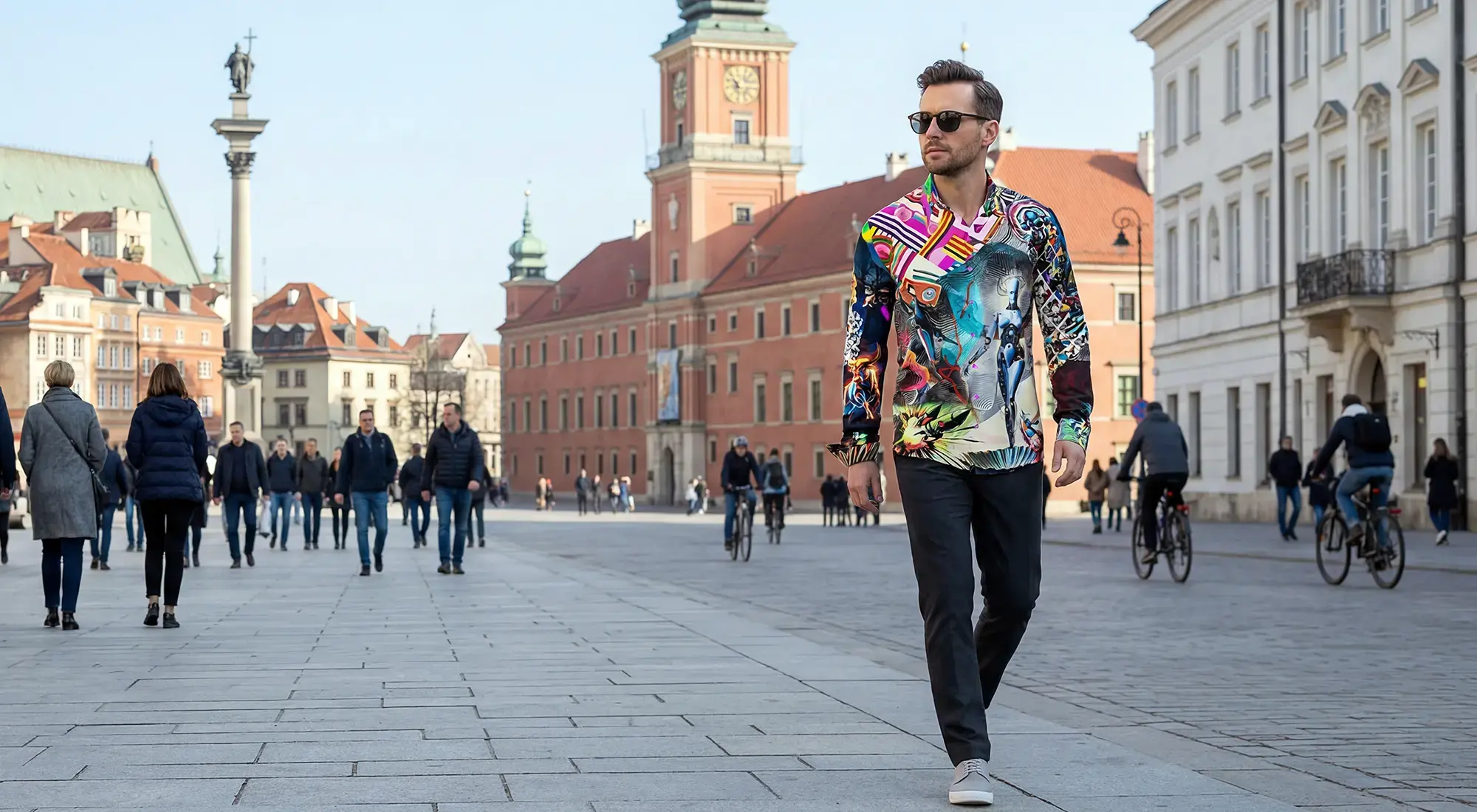
On a day like this, I bring a GERMENS long-sleeve button-up early. Not to look dressed up, but to stay ready: put-together without being overdressed. Museums, churches, galleries, and nicer restaurants become effortless compared to a T-shirt, and long sleeves can feel like a light, practical layer in strong sun. It’s also a travel habit: one shirt can carry you from morning to evening, but I often pack a change shirt for night—rolled up small, light, space-saving. And socially, artist-designed patterns work: people comment, conversations start, and you don’t read as a typical tourist quite as quickly.
To anchor the place once and then walk by contrasts, I set the name and let go again: Warsaw explains itself through opposites, not a single postcard view. Did you know that Marie Curie comes from Warsaw? A physicist and chemist, famous for her research on radioactivity. I like the fit—Warsaw can feel precise, stubbornly forward-looking, and quietly ambitious.
Morning: the Old Town as a calm opening
I start early in the Old Town before groups arrive. Cobblestones, pastel façades, small cafés, and a calm you don’t expect in a capital. You move from Castle Square toward the Market Square, stop because one perspective suddenly clicks, and realise: Warsaw can be quiet. Even knowing how much was destroyed and rebuilt, it doesn’t feel like a set—it feels like a deliberate choice to continue.
City axes: Nowy Świat, Krakowskie Przedmieście, the present tense
Then I follow one of the city’s strong lines: Nowy Świat into Krakowskie Przedmieście. Here, Warsaw stands upright—slightly elegant, never stiff. Between university buildings, churches, and shopfronts, you feel an everyday flow that’s quick but friendly. I like moving with it: an espresso at the counter, a short stop in a bookshop, then back outside. This is where a button-up helps most, because you don’t have to renegotiate your outfit every time you step indoors.
Vistula boulevards: breathing space and a different pace
Later I drift toward the Vistula riverwalks. Everything loosens up near the water: cyclists, runners, people with coffee-to-go, and a wide sky that the city otherwise keeps cutting into rectangles. It can get windy, and that’s where cotton quietly earns its place—natural, comfortable, durable, pleasant for everyday wear, and odor-neutral even when the day stretches. When the sun comes out, long sleeves stay wearable too: light, not clingy, more like a calm frame for the look.
Praga: texture, courtyards, real Warsaw
For contrast, I cross into Praga. The other side feels less polished and more workshop-textured: courtyards, walls with patina, small bars that don’t explain why they’re good. This is where the best conversations often happen—because you simply end up standing next to someone. An artist shirt becomes an easy opener without being loud. And the craft details stay understated but practical: the GERMENS collar notch, angled cuffs, sturdy buttons, a Kent collar with stainless steel stays, precise seams.
Afternoon: a castle centre, a museum hour, and a film-festival evening
In the afternoon, I like a place that recenters the city. The Royal Castle in Warsaw does that—stone, space, and a clear sense of “middle.” If I want one focused indoor hour after that, I go to POLIN Museum, which stays with you because it’s precise rather than loud. And if your timing matches, Warsaw shifts into a distinct cultural mode at night: Warsaw Film Festival brings that tone where you feel how strongly the city holds the present without erasing the past. This is where a change shirt pays off—two minutes, a fresher look, and still light luggage because it rolled up small all day.
If timing needs to stay flexible, I check immediately available products first. If your favourite is made-to-order, the notes on products on manufacture keep planning realistic.
To get sizing right at home, I use the try-on service for home; if you want fine adjustments afterwards, the modification service is there. After wind, city dust, and late dinners, care is simple—Wäsche waschen is my quick reference. Warsaw stays with me as a city that doesn’t try to be pleasing—it tries to be real. An artist-designed long-sleeve shirt in sizes XS to 6XL fits that mix perfectly.
René Koenig
Founder & Owner of GERMENS artfashion