69 Extraordinary Shirt Brands Worldwide – From Hawaiian Shirts to Wearable Art

René Koenig
Founder & Owner of GERMENS artfashion
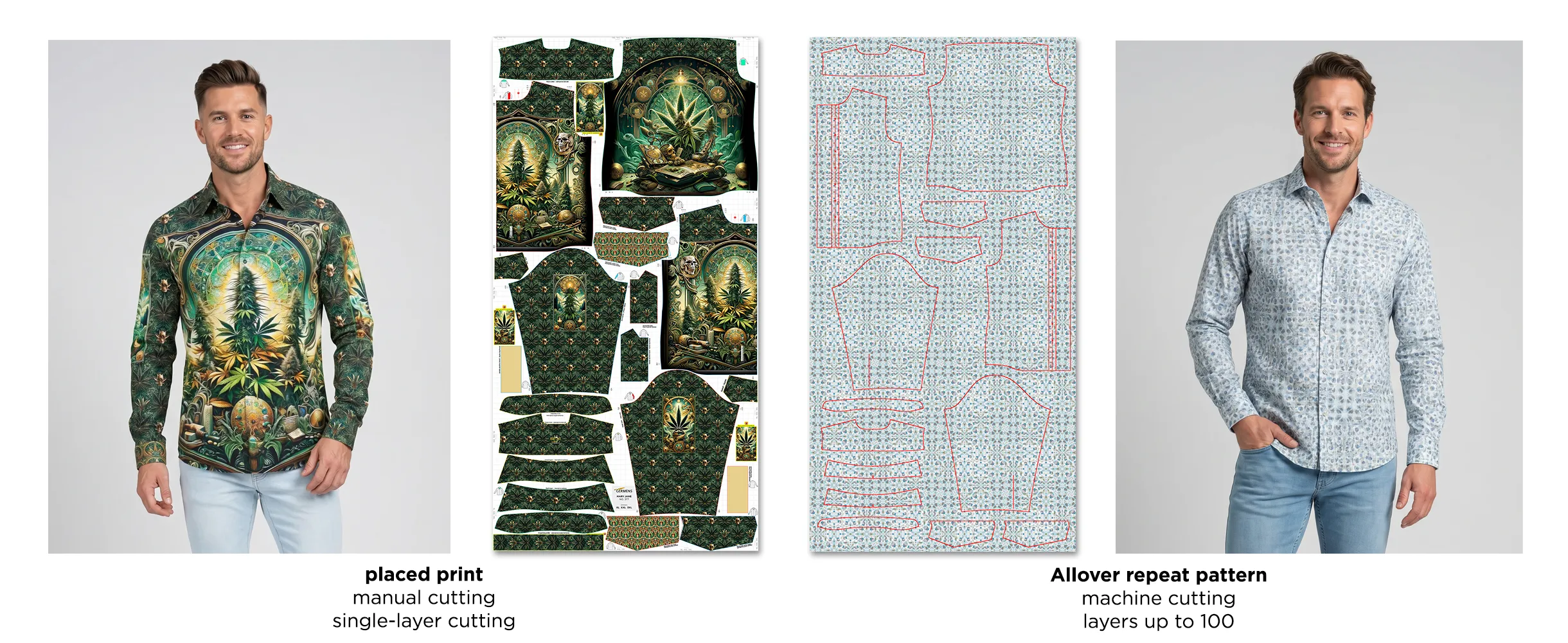
Only very few shirt brands worldwide work with truly placed prints on fabric in the way GERMENS does. Some well-known examples where special placements or elaborate motif compositions may occur include Robert Graham, Versace, and Dolce & Gabbana. However, the major difference lies in the details: around 90% of colorful or patterned shirts are based on so-called all-over patterns. The motifs repeat at fixed intervals, often every 10 or 20 centimeters. This can quickly create a wallpaper effect, because the pattern simply runs across the entire fabric surface regardless of the cut. At GERMENS, however, the designs are precisely adapted to the shirt’s pattern pieces — individually for each of the 10 sizes. Front panels, back, sleeves, collar, cuffs, and button placket are visually coordinated with one another. This manual effort is significantly higher than with evenly patterned fabrics. When looking at other brands, pay close attention to the visual difference: does the pattern repeat regularly, or has the motif been deliberately composed for the shirt? This is exactly where it becomes clear why GERMENS is something truly special — wearable art that is not simply sewn from fabric, but where design and cut form one coherent whole.

Comparison of engineered placed print with manual single-ply cutting versus all-over repeat print with automated cutting
Placed Print or Allover Pattern? A Comparison of Extraordinary Shirt Brands
When it comes to eye-catching shirts, there is an important design difference: many brands use allover prints, where a pattern repeats regularly across the fabric. GERMENS, by contrast, works with placed designs that are precisely adapted to the individual pattern pieces of the shirt. This prevents a wallpaper effect and creates a wearable work of art in which the front panels, back, sleeves, collar, cuffs and button placket are deliberately designed.
| Brand | Type of Pattern | Assessment | Visible Difference | Effort in Comparison |
|---|---|---|---|---|
| GERMENS | Placed art motifs, no classic allover repeats | Very high proportion of placed designs | The motifs are adapted to the front panels, back, sleeves, collar, cuffs and button placket. Each design is adjusted to the pattern pieces and sizes. | Very high – each shirt looks like a composed individual artwork. |
| Robert Graham | Artistic, often large-scale prints with decorative details | Partly similarly elaborate, but not consistently like GERMENS | Many shirts appear more deliberately designed than regular repeat fabrics. Some feature large motif areas, embroidery or asymmetrical effects. | High – however, this varies depending on the model. |
| Etro | Paisley, ornaments, graphic patterns; some explicitly placed prints | Mixed form: some placed designs, many allover patterns | Etro offers individual shirts with placed paisley prints. At the same time, many collections consist of repeating paisley and ornamental patterns. | Medium to high – very elaborate in individual models. |
| Versace | Luxurious baroque, logo, ornamental and silk prints | Predominantly allover prints | The patterns usually run evenly across the entire fabric surface. The effect is luxurious, but often repeat-based and not individually composed for each pattern piece. | Medium – high-quality print, but usually less manual pattern-piece composition. |
| Dolce & Gabbana | Majolica, Carretto, floral, logo and folklore prints | Predominantly allover prints | Many shirts show strong, colorful patterns that repeat across the entire shirt. The motifs are decorative, but often not placed on the shirt as one coherent image. | Medium – high brand and material effort, mostly classic patterned fabric. |
| Gucci | Flora, logo, silk and ornamental prints | Predominantly allover prints | The patterns are very high-quality and typical of the brand, but are often used as continuous fabric prints. | Medium – luxurious fabrics and prints, but usually no size-specific motif placement. |
| Kenzo | Graphic prints, flowers, logos, Asian-inspired motifs | Mostly allover prints | The patterns often appear as repeating designs across the entire shirt surface. | Normal to medium – eye-catching, but mostly repeat-based. |
| Moschino | Pop art, logo, comic and statement prints | Mostly allover prints | Many designs are based on striking repetition, logos or graphic elements across the entire surface. | Normal to medium – strong design, but usually no precise pattern-piece placement. |
| Roberto Cavalli | Animal prints, floral patterns, ornamental luxury prints | Predominantly allover prints | The patterns look elegant and striking, but usually run evenly across the fabric. | Medium – luxurious look, but often classic repeat printing. |
| Paul Smith | Stripes, floral patterns, graphic prints, color accents | Predominantly allover prints or regular patterned fabrics | Many shirts are high-quality and colorful, but usually follow a repeating or evenly distributed fabric design. | Normal to medium – fashionable, but usually not constructed as an individual artwork. |
| Dsquared2 | Logo, streetwear, western and graphic prints | Mostly allover prints or individual front motifs | The design is distinctive, but often not conceived as a continuous motif coordinated across all pattern pieces. | Normal to medium – strong brand look, usually less complex placement. |
| Fashion chains and mainstream brands | Flowers, stripes, dots, small motifs, seasonal prints | Almost exclusively allover patterns | The motifs repeat regularly across the fabric. This is efficient, cost-effective and suitable for large production quantities. | Low to normal – efficient series production with repeating patterns. |
Conclusion: The market for eye-catching shirts is predominantly shaped by allover prints. These patterns are decorative, but they repeat regularly across the fabric surface. Only a few brands work with placed prints, where the motif is deliberately adapted to the pattern pieces of the shirt. This is exactly where the special effort at GERMENS lies: the designs are not simply printed onto fabric, but composed for the shirt. This creates a visible difference between patterned fabric and wearable art.
Note: This classification is based on visible characteristics in online shops and product descriptions. Collections can change; individual brands may offer both allover patterns and placed prints depending on the season.
1. A Fish Named Fred – Netherlands
A Fish Named Fred offers humorous, colorful menswear with playful prints and distinctive inner details. The shirts are often made from cotton or cotton blends and appeal to men who want to stand out in everyday life.
Differences from GERMENS: A Fish Named Fred is more seasonal and fashion-driven. GERMENS offers a larger permanently available design archive, ten sizes, home try-on service, and a broader portfolio of shirts, blouses, and T-shirts.
https://afishnamedfred.com
2. Amiri – USA
Amiri brings together rock, streetwear, and luxury references. Depending on the collection, its shirts can be striking, refined, or graphically driven, using cotton, silk, or blended fabrics. The brand has a strong stylistic identity, but it is less an idiosyncratic shirt specialist than a powerful luxury label with a clear aesthetic scene affiliation. Distinctiveness often comes through context and finish.
Differences from GERMENS: Amiri is more strongly oriented toward luxury streetwear and seasonal collections. GERMENS focuses more precisely on shirts, blouses, and T-shirts as permanently orderable artist surfaces with strong service and size availability.
https://amiri.com
3. Avanti Hawaii – USA
Avanti is known for vintage-inspired Hawaiian shirts made from silk, rayon, and cotton. Many motifs reference historic postcards, tropical landscapes, and retro designs.
Differences from GERMENS: Avanti specializes in classic Hawaiian and retro shirts. GERMENS offers a much broader design portfolio with art motifs, several product types, and fit-related services.
https://avantihawaii.com
4. Beams Plus – Japan
Beams Plus interprets classic American menswear with Japanese precision and a strong sense of fabrics, checks, chambrays, and everyday character. The shirts are usually not extremely loud, but they are high-quality, detail-conscious, and stylistically distinctive. Cotton, Oxford, chambray, and linen are typical foundations. The brand is important because distinctiveness here is created less through print and more through stylistic precision.
Differences from GERMENS: Beams Plus focuses more strongly on heritage and fabric culture. GERMENS is more visually assertive in a positive sense, closer to art, and much more systematically focused on motif variety, sizes, and services.
https://www.beams.co.jp/label/beamsplus/
5. Bode – USA
Bode is a special reference because the brand works with vintage textiles, narrative materials, and small-series, collectible craftsmanship. Shirts can feel like textile stories. Cotton, linen, and special fabrics shape the look. Distinctiveness is not created only through prints, but through material history, depth of detail, and an almost archival approach to clothing.
Differences from GERMENS: Bode is much more rooted in the object- and material-historical collector segment. GERMENS makes artist designs more broadly accessible, more service-oriented, and more systematically orderable across sizes and product types.
https://bode.com
6. Bugatchi – USA
Bugatchi offers high-quality men’s shirts with modern prints, colors, and comfortable fabrics. Materials include cotton, stretch fabrics, and performance blends.
Differences from GERMENS: Bugatchi is more focused on premium menswear and business casual. GERMENS stands apart through artistic motifs, limited editions, home try-on service, and a very large variety of designs.
https://www.bugatchi.com
7. Burberry – United Kingdom
Burberry is primarily associated with heritage, tailoring, and iconic pattern codes. Although shirts with prints, logos, and seasonal motifs exist, the core of the brand is not an artistic shirt universe, but a global luxury house with a clear tradition-based identity. Cotton, silk, and blended fabrics are used. Burberry is therefore more of a contextual comparison brand than a direct benchmark for extraordinary shirts.
Differences from GERMENS: Burberry is clearly driven by heritage and luxury-house identity. GERMENS focuses its energy much more strongly on striking artist designs, 10 sizes, service, and a visible specialization in shirts, blouses, and T-shirts.
https://www.burberry.com
8. Camp David – Germany
Camp David is known for sporty casualwear with logos, prints, and distinctive details. Its shirts are usually made from cotton or cotton blends.
Differences from GERMENS: Camp David works more strongly with brand-driven styling and casualwear. GERMENS relies on artist designs, limited series, and a broader art-fashion concept.
https://www.campdavid-soccx.de
9. Casa Moda – Germany
Casa Moda offers classic and sporty men’s shirts, often made from cotton. Checks, prints, and casual patterns are part of the assortment.
Differences from GERMENS: Casa Moda is practical everyday menswear. GERMENS is more artistic, more limited, and offers far more extraordinary motifs.
https://www.casamoda.com
10. Casablanca – France
Casablanca combines luxurious resort aesthetics with sporty elegance and visually powerful motifs. Many shirts feel sunny, glamorous, and scenic, often made from silk or cotton. In the luxury segment, the brand is an important modern player for expressive shirts and image-rich tops. Its character sits between vacation, tennis-club fantasy, elegance, and high-quality graphics.
Differences from GERMENS: Casablanca is more at home in a seasonal luxury and resort narrative. GERMENS is closer to everyday wear, broader in its size system, and more service-oriented, with permanently orderable artist designs across several product forms.
https://casablancaparis.com
11. Cipo & Baxx – Germany
Cipo & Baxx offers striking menswear with embroidery, prints, appliqués, and strong details. The shirts can appear very expressive.
Differences from GERMENS: Cipo & Baxx is more strongly rooted in street and casual fashion. GERMENS differs through artistic motif worlds, cotton shirts, service, and permanent design availability.
https://www.cipoandbaxx.com
12. Claudio Lugli – United Kingdom
Claudio Lugli specializes in striking printed shirts. Motifs range from floral patterns and fantasy or animal themes to graphic subjects. Many shirts are made from cotton, cotton stretch, or Tencel blends.
Differences from GERMENS: Claudio Lugli is strong in statement shirts and larger sizes. GERMENS differs through artist designs, a permanent design archive, home try-on service, alteration service, and products for women and men.
https://claudioluglishirts.com
13. Cubavera – USA
Cubavera is especially known for guayabera shirts, summer fabrics, and Latin American-inspired menswear. Cotton, linen, and viscose are important materials. The brand is culturally strong, but less art- or limitation-oriented. In an international overview, Cubavera shows how extraordinary shirts can also be defined through regional tradition, lightweight fabrics, and cultural form language.
Differences from GERMENS: Cubavera works more through regional summer and guayabera tradition. GERMENS is closer to art, more graphically varied, and much broader in both service model and size range.
https://www.cubavera.com
14. Desigual – Spain
Desigual stands for colorful fashion, patchwork, prints, and graphic motifs. The brand offers women’s and men’s fashion and occasionally collaborates with artists and designers. Materials range from cotton and viscose to synthetic fibers.
Differences from GERMENS: Desigual is a broad fashion brand with changing collections. GERMENS focuses more strongly on shirts, blouses, and T-shirts as wearable art with permanently orderable designs.
https://www.desigual.com
15. Dolce & Gabbana – Italy
Dolce & Gabbana works with Mediterranean motifs, ornamentation, flowers, symbolism, and high-quality fabrics such as cotton, silk, and linen.
Differences from GERMENS: Dolce & Gabbana is luxury and runway fashion. GERMENS offers a long-term available art collection with fit services and significantly broader everyday accessibility.
https://www.dolcegabbana.com
16. Dries Van Noten – Belgium
Dries Van Noten is internationally one of the most important references for art-adjacent menswear. Prints, floral compositions, layers of color, and a very individual balance of wearability and imagination define the brand. Cotton, silk, and blended fabrics are typical. The shirts are often not loud in a mass-market sense, but aesthetically highly differentiated and exceptionally designed.
Differences from GERMENS: Dries Van Noten is more runway- and designer-driven. GERMENS is more directly readable as a shirt concept, more service-oriented, and more long-term in building permanently orderable artist designs.
https://www.driesvannoten.com
17. DSQUARED2 – Italy
DSQUARED2 combines Italian production with a louder style energy shaped by Canadian references. Its shirts move between denim, casual looks, graphic elements, and sometimes highly visible brand aesthetics. Cotton and blended fabrics dominate. The brand delivers striking looks, but is structured more as an overall fashion label than as a highly differentiated specialist for artistic shirts.
Differences from GERMENS: DSQUARED2 is more lifestyle- and fashion-label-oriented. GERMENS focuses art on the shirt more systematically and complements this with 10 sizes, services, and permanent reorderability for many designs.
https://www.dsquared2.com
18. ETERNA – Germany
ETERNA is a long-established German shirt maker with a focus on cotton, easy-iron fabrics, and business shirts. Casual shirts with patterns are also part of the range.
Differences from GERMENS: ETERNA is more classic and functional. GERMENS is more artistic, more limited, and offers motifs across product types as shirts, blouses, or T-shirts.
https://www.eterna.de
19. Eton – Sweden
Eton is a high-quality Swedish shirt maker with a focus on fabric quality, collars, workmanship, and fit. In addition to classics, the brand also offers printed and patterned shirts.
Differences from GERMENS: Eton is strong in craftsmanship and elegance. GERMENS is more image-driven, more artistic, and offers a permanently growing design portfolio across several product types.
https://www.etonshirts.com
20. ETRO – Italy
ETRO is an Italian luxury brand famous for paisley patterns, intense colors, and high-quality fabrics such as cotton, silk, and linen. The shirts feel elegant, luxurious, and often artful.
Differences from GERMENS: ETRO is a luxury fashion brand with seasonal collections. GERMENS is more focused on permanently orderable artist designs, broad size availability, and service around fit.
https://www.etro.com
21. FARM Rio – Brazil
FARM Rio is known for tropical colors, nature motifs, and Brazilian joie de vivre. The range mainly includes women’s fashion, blouses, dresses, and tops. Materials include cotton, viscose, linen, and more sustainable fibers.
Differences from GERMENS: FARM Rio is more of a women’s and lifestyle brand. GERMENS offers art designs for men’s shirts, women’s blouses, and T-shirts with a unified motif world and size service.
https://farmrio.com
22. GERMENS – Germany
GERMENS stands for wearable art from Chemnitz. The shirts, blouses, women’s long-sleeve tops, and T-shirts are designed by artists and are available in more than 550 designs. Many motifs remain permanently orderable until a possible limitation is reached. Men’s shirts are available in sizes from XS to 6XL. Special features include home try-on service, alteration service, worldwide shipping, and a steadily growing design portfolio.
https://www.germens.shop
23. Go Barefoot – USA
Go Barefoot is an authentic Hawaiian shirt brand with classic tropical motifs and a relaxed casual approach. Cotton and rayon are typical fabrics. In international comparison, the brand is less luxurious and less art-oriented, but clearly positioned and culturally coherent. It is important in a complete overview because it represents the more down-to-earth end of the Aloha segment.
Differences from GERMENS: Go Barefoot is more traditional, casual, and regionally coded. GERMENS is more systematic in its design approach, closer to art, broader in sizes, and significantly more comprehensive through services plus women’s and men’s ranges.
https://gobarefoot.com
24. Gucci – Italy
Gucci regularly offers striking shirts with flowers, animals, ornaments, logos, and retro elements. Materials include cotton, silk, linen, and blended fabrics.
Differences from GERMENS: Gucci is a global luxury house with seasonal collections. GERMENS offers a specialized art-shirt collection with permanent availability and fit service.
https://www.gucci.com
25. Guide London – United Kingdom
Guide London offers fashionable men’s shirts with floral, graphic, and colorful prints in a more accessible price segment than many luxury labels. Cotton and blended fabrics dominate. The brand appeals to customers looking for special shirts for everyday wear, events, or going out. Internationally, Guide London is more of a consistent print-shirt provider than an art-concept label.
Differences from GERMENS: Guide London is more fashion-seasonal and less structured as a permanent artist archive. GERMENS offers more sizes, more long-term availability per design, and more services around fit and selection.
https://guidelondon.co.uk
26. Haupt – Germany / Switzerland
Haupt is known for colorful casual shirts, prints, and high-quality fabrics. Materials are mostly cotton or linen.
Differences from GERMENS: Haupt is a fashionable shirt brand with seasonal designs. GERMENS offers a larger art collection, reorderability, and individual services.
https://www.haupt-fashion.com
27. Heron Preston – USA
Heron Preston sits at the intersection of streetwear, graphics, branding, and luxury. The brand uses visible codes, signs, and typographic elements; cotton and blended fabrics shape many tops. Shirts are not the sole focus, but the brand makes sense in a comparison with Farfetch-adjacent designer labels because it shows how graphics and fashion can merge.
Differences from GERMENS: Heron Preston is conceived more as a streetwear-adjacent graphics label. GERMENS focuses more precisely on shirts, blouses, and T-shirts as longer-lasting, service-supported artist products.
https://www.heronpreston.com
28. Hilo Hattie – USA
In the Hawaiian context, Hilo Hattie is a traditional brand that combines Aloha shirts with tourist visibility and regional recognition. Cotton and rayon are typical materials. The brand does not have a pronounced art or luxury claim, but it belongs in a complete overview because it represents the popular, accessible end of extraordinary tropical and Hawaiian shirts.
Differences from GERMENS: Hilo Hattie is more souvenir- and region-oriented. GERMENS is much more clearly profiled as an artist and shirt brand and offers additional differences in sizes, services, and permanent motif availability.
https://www.hilohattie.com
29. Jacques Britt – Germany
Jacques Britt offers high-quality shirts with both classic and fashionable orientation. In addition to business shirts, the range also includes patterns, prints, and casual shirts made from cotton or linen.
Differences from GERMENS: Jacques Britt is more elegant and classic. GERMENS is more focused on striking artist designs, limitation, size variety, and a permanent motif offering.
https://www.jacquesbritt.com
30. Jams World – Hawaii / USA
Jams World stands for colorful resort fashion and wearable art from Hawaii. The motifs often come from original artworks or archive prints. Rayon is frequently used.
Differences from GERMENS: Jams World is more resort and casual fashion. GERMENS offers classic shirt shapes, cotton shirts, many sizes, women’s blouses, T-shirts, and permanently orderable designs.
https://www.jamsworld.com
31. JW Anderson – United Kingdom
JW Anderson is strong where distinctiveness arises through ideas, closeness to art, gender openness, and fashion shifts. Shirts are often conceptual and graphically interesting, but not necessarily loud. Cotton and blended fabrics play the main role. The brand is especially useful as a comparison where an unusual shirt is not only colorful but also formally or semantically rethought.
Differences from GERMENS: JW Anderson relies more strongly on designer concept and form ideas. GERMENS is more directly tangible through artist graphics, size logic, home try-on, alteration service, and permanent design availability.
https://www.jwanderson.com
32. Kahala – Hawaii / USA
Kahala is considered one of the oldest Aloha shirt brands. The shirts show tropical, cultural, and historical motifs from Hawaii. Materials are often cotton, viscose, or blended fabrics.
Differences from GERMENS: Kahala is strongly regional and focused on Aloha shirts. GERMENS combines artist designs with European shirt forms, many sizes, women’s and men’s products, and reorderability.
https://kahala.com
33. Kaiser Friedrich – Germany
Kaiser Friedrich from Berlin has been associated with distinctive and colorful men’s shirts. The brand is interesting for a German overview of extraordinary shirts, even though current information is limited.
Differences from GERMENS: Today, GERMENS is much more clearly positioned as an art brand and offers a large permanent assortment with service, size variety, and products for both women and men.
https://www.kf-hemden.de
34. Kapital – Japan
Kapital is a cult brand for textile experimentation, indigo, patchwork, handcrafted details, and highly individual visual worlds. Shirts can become very individual and collectible; cotton, denim, linen, and special fabrics shape many products. Kapital is not simply colorful, but deeply craft-based and stylistically unique. This is precisely why it is relevant for an international overview of extraordinary shirts.
Differences from GERMENS: Kapital is more experimental, craft-oriented, and collector-focused. GERMENS organizes its artist designs more clearly for series ordering, broad sizes, services, and direct comparability within the shirt range.
https://www.kapital.jp
35. Kenzo – France
Kenzo has been known for colorful, graphic, and cross-cultural fashion for decades. Shirts and T-shirts can feature floral, animal, or pop-cultural motifs and often feel lighter and more energetic than classic luxury fashion. Cotton and blended fabrics are common. The brand is relevant because it carries a long history of visibility, color, and image-based fashion.
Differences from GERMENS: Kenzo is organized more strongly as an international designer house with seasonal logic. GERMENS is more focused as a shirt and blouse concept with size variety, services, and long-term available artist designs.
https://www.kenzo.com
36. Liberty London – United Kingdom
Liberty is famous for fine fabric prints, floral patterns, and high-quality cotton fabrics. Many shirts use detailed Liberty fabrics with a long textile history.
Differences from GERMENS: Liberty is strong in fabric and pattern culture. GERMENS connects motifs more directly with individual artist designs, size variety, reorderability, and home try-on.
https://www.libertylondon.com
37. Mambo – Australia
Mambo combines surf culture, art, humor, and loud graphics. The brand strongly treats clothing as a visual surface and works with striking motifs.
Differences from GERMENS: Mambo is more rooted in surf and pop culture. GERMENS is more strongly shirt- and art-fashion oriented, with a permanent design archive, fit service, and a broad product range.
https://www.mambo.com.au
38. Marcelo Burlon County of Milan – Italy
Marcelo Burlon County of Milan is known for strong graphic signs, symbolic prints, and a clear luxury-street aesthetic. Shirts and tops often carry visual codes that create immediate recognition. Cotton and blended fabrics dominate. The brand is especially relevant when extraordinary shirts are considered from the perspective of striking graphic symbols rather than classic fabric culture.
Differences from GERMENS: Marcelo Burlon remains more street- and symbol-oriented. GERMENS offers a fuller shirt concept with broader size availability, services, and a stronger focus on artists rather than label symbols.
https://www.marceloburlon.eu
39. Marni – Italy
Marni is known for unconventional color combinations, artful-looking prints, and an intellectual, slightly shifted fashion perspective. Shirts often appear in cotton, viscose, or blended fabrics and can look playful, abstract, or graphic. Stylistically, the brand is closer to fashion art and experimental design culture than to classic men’s shirt tradition.
Differences from GERMENS: Marni is more designer- and season-oriented. GERMENS makes its visual worlds more permanent, more service-oriented, and more closely connected to concrete size and try-on practice.
https://www.marni.com
40. Missoni – Italy
Missoni is world-famous for colorful knit patterns, zigzag looks, and textile art. Shirts are only one part of the assortment, but the pattern culture is especially defining.
Differences from GERMENS: Missoni stands above all for textile patterns and luxury fashion. GERMENS focuses more strongly on shirts, blouses, and T-shirts as wearable art with a permanent motif offering.
https://www.missoni.com
41. Moschino – Italy
Moschino is known for ironic, pop-cultural, and striking fashion. Shirts and T-shirts often show logos, illustrations, comic elements, or strong graphic motifs.
Differences from GERMENS: Moschino is pop fashion and a luxury label. GERMENS is more focused on artist shirts, cotton, service, size variety, and permanent reorderability.
https://www.moschino.com
42. Nat Nast – USA
Nat Nast is known for retro bowling shirts, silk shirts, and relaxed casualwear. The brand combines American mid-century aesthetics with high-quality leisure style.
Differences from GERMENS: Nat Nast is more retro and casual fashion. GERMENS works with artist designs, offers significantly more permanently available motifs, and provides several product forms for women and men.
https://www.natnast.com
43. Off-White – Italy
Off-White brought together graphics, streetwear, conceptual thinking, and luxury in a way that also strongly influenced shirts. Many models work with clear signs, industrial codes, or striking prints. Cotton and blended fabrics dominate. The brand is less a shirt specialist than a culturally influential reference for visible, iconographically charged fashion with collectible character.
Differences from GERMENS: Off-White is more strongly shaped as a luxury and street-cult brand. GERMENS is more service-specific, broader in sizes, and focuses its motifs more clearly as wearable art in the shirt and blouse segment.
https://www.off---white.com
44. OLYMP – Germany
OLYMP is a major German shirt brand with business, casual, and printed shirts. Materials are mostly cotton and cotton blends.
Differences from GERMENS: OLYMP offers strong availability and classic shirt competence. GERMENS differs through art motifs, limited designs, home try-on service, and individual adjustment.
https://www.olymp.com
45. Pagong Kyoto – Japan
Pagong combines traditional Japanese textile art with modern clothing. The brand uses motifs from kimono and Yuzen traditions. Materials include cotton, rayon, and silk.
Differences from GERMENS: Pagong is strongly rooted in Japanese textile tradition. GERMENS differs through European shirt forms, more than 550 designs, sizes XS to 6XL, home try-on service, and a portfolio for women and men.
https://pagong.jp
46. Palm Angels – Italy
Palm Angels is a luxury-street brand with clearly visible prints, sportswear references, and a visual identity that comes more from image culture and scene aesthetics than from classic shirt tradition. Cotton and blended fabrics dominate. The brand is relevant in an overview of extraordinary shirts because it shows how strongly streetwear has changed the understanding of print and graphics in the luxury segment.
Differences from GERMENS: Palm Angels is more street- and drop-oriented. GERMENS thinks shirts and blouses more specifically, offers home try-on, sizes XS to 6XL, and longer-term availability of individual motifs.
https://www.palmangels.com
47. Paradise Found – USA
Paradise Found is a classic address for cult Hawaiian shirts and became especially popular through iconic pop-culture motifs. Rayon fabrics and classic Aloha cuts shape many models. The brand is less broadly positioned than major lifestyle or luxury labels, but it has strong recognition value and its own collector character. For Aloha enthusiasts, it is a relevant specialist address.
Differences from GERMENS: Paradise Found is clearly a narrow Aloha specialist. GERMENS also offers art motifs in several shirt forms, women’s and men’s products, greater size variety, and more service around the purchase.
https://www.paradisefoundshirts.com
48. Paul Smith – United Kingdom
Paul Smith combines British tailoring tradition with color, humor, and graphic patterns. Shirts are usually made from cotton, sometimes from linen or silk.
Differences from GERMENS: Paul Smith is an international designer brand with seasonal collections. GERMENS offers a permanent art archive, broad sizes, and designs that work across product types.
https://www.paulsmith.com
49. Prada – Italy
Prada works with graphic reduction, pop prints, technical materials, and fashion concepts. Shirts are made from cotton, silk, synthetic fibers, or blended fabrics.
Differences from GERMENS: Prada is conceptual luxury fashion. GERMENS is more focused on visible artist designs, cotton shirts, broad sizes, and reorderability.
https://www.prada.com
50. R2 Amsterdam – Netherlands
R2 Amsterdam offers fashionable shirts with floral patterns, prints, and high-quality cotton fabrics. The shirts appear elegant, colorful, and refined.
Differences from GERMENS: R2 Amsterdam is more of a fashionable print-shirt brand. GERMENS is more of an art edition concept, offers more designs, broader sizes, and products for women and men.
https://www.r2.amsterdam
51. Reserva – Brazil
Reserva is a Brazilian menswear brand with casual shirts, T-shirts, and casualwear. The brand works with Brazilian lifestyle, modern prints, and partial personalization.
Differences from GERMENS: Reserva is more casual menswear. GERMENS is more of an art collection with permanent motif availability, limitation, and fit-related services.
https://www.usereserva.com
52. Reyn Spooner – Hawaii / USA
Reyn Spooner is one of the best-known Aloha shirt brands. It is famous for softer reverse prints, Hawaii motifs, and collector shirts. Materials include cotton, cotton blends, and performance fabrics.
Differences from GERMENS: Reyn Spooner stands for Aloha shirts and Hawaiian culture. GERMENS is broader: art shirts, women’s blouses, T-shirts, long-sleeve and short-sleeve variants, plus services.
https://www.reynspooner.com
53. Rhude – USA
Rhude brings together street luxury, motorsport references, and modern U.S. designer energy. Shirts are less central than T-shirts or outerwear, but they can be distinctive and graphically visible. Cotton and blended fabrics dominate. The relevance of the brand lies more in the contemporary luxury context than in deep shirt specialization, which still makes it interesting for Farfetch-adjacent comparisons.
Differences from GERMENS: Rhude is much more street-luxury- and collection-driven. GERMENS is more focused on wearable art in the shirt segment and adds size and service advantages that Rhude does not place at the center in the same way.
https://rh-ude.com
54. Robert Graham – USA
Robert Graham is known for very striking men’s shirts with strong colors, contrast fabrics, embroidery, and many details. The brand also offers limited editions and appeals to men who want to wear a shirt as a fashion statement. Materials are often cotton or cotton blends.
Differences from GERMENS: Robert Graham works more seasonally. GERMENS offers a permanently growing archive with more than 550 designs, home try-on service, alteration service, and sizes from XS to 6XL.
https://www.robertgraham.us
55. Roberto Cavalli – Italy
Roberto Cavalli stands for animal prints, luxurious fabrics, strong colors, and glamorous patterns. Shirts are often made from silk, viscose, or cotton.
Differences from GERMENS: Cavalli is extravagant and luxurious. GERMENS differs through artist collections, many sizes, home try-on service, and a broader product range.
https://www.robertocavalli.com
56. Seidensticker – Germany
Seidensticker is one of the best-known German shirt brands. The focus is on business shirts, cotton, fit, and everyday practicality. Individual lines also show fashionable prints.
Differences from GERMENS: Seidensticker is more classic and more broadly industrial. GERMENS offers much more striking artist designs, limited series, and a growing art archive.
https://www.seidensticker.com
57. Signum – Germany
Signum was long known for colorful, sporty, and patterned men’s shirts. The brand appealed to men looking for casual shirts with more character.
Differences from GERMENS: Signum stands more for fashionable casual shirts. GERMENS offers a more extensive artist collection, reorderability, home try-on, and sizes up to 6XL.
58. Songzio – South Korea
Songzio is an exciting brand in the international designer environment because it brings together art, architecture, experimental textiles, and wearable fashion. Shirts are often more conceptual than classic, with materials ranging from cotton to more specialized textile solutions. The brand is relevant for customers who are not only looking for colorful shirts, but for a more deeply designed, avant-garde signature.
Differences from GERMENS: Songzio is more avant-garde and runway-related. GERMENS translates art more directly into everyday shirts, blouses, and T-shirts with more sizes, services, and clearer ordering logic.
https://songzio.com
59. Stenströms – Sweden
Stenströms stands for high-quality shirts, cotton, European production, and classic elegance. Prints and patterns exist, but they are usually more subtle.
Differences from GERMENS: Stenströms is more premium classic. GERMENS offers more striking artist designs, limitation, home try-on service, and a broader range of motifs.
https://stenstroms.com
60. Stilfaktor – Germany
Stilfaktor was known in the 2000s for striking shirts, strong colors, and special patterns. Today, the brand is hardly visible, but it remains interesting as a former provider of extraordinary shirts.
Differences from GERMENS: GERMENS is active today, continues to grow, and offers permanently orderable artist designs, home try-on service, alteration service, and worldwide shipping.
61. Sun Surf – Japan
Sun Surf reproduces historic Hawaiian shirts with great attention to detail. The motifs are based on Aloha shirts from the 1930s to the 1950s. Typical features include rayon fabrics, vintage patterns, and collector character.
Differences from GERMENS: Sun Surf focuses strongly on historic Aloha shirts. GERMENS offers modern artist designs, long-sleeve and short-sleeve shirts, blouses, T-shirts, and a permanently growing collection.
https://www.toyo-enterprise.co.jp
62. Thom Browne – USA
Thom Browne is best known for a highly distinctive, conceptual interpretation of classic menswear. Shirts often become extraordinary through proportion, uniform ideas, and precise design rather than through loud prints. Cotton and Oxford fabrics dominate. The brand is therefore not a classic colorful-shirt reference, but highly relevant to the question of how unusual a shirt can become through concept and cut.
Differences from GERMENS: Thom Browne is more strongly defined by uniform concepts and cut design. GERMENS works more clearly through artist graphics, motif variety, services, and a broader, more practical product architecture.
https://www.thombrowne.com
63. Tommy Bahama – USA
Tommy Bahama is a large lifestyle brand for resortwear. Shirts with palms, flowers, maritime motifs, and vacation moods are part of the range. Materials include cotton, silk, linen, viscose, and blended fabrics.
Differences from GERMENS: Tommy Bahama is broadly commercial and strongly focused on resort fashion. GERMENS is smaller, more artistic, more limited, and offers a permanently growing motif archive.
https://www.tommybahama.com
64. Tori Richard – Hawaii / USA
Tori Richard was founded in Honolulu in 1956 and is known for high-quality resortwear and Aloha shirts. The brand works with artful prints, cotton, silk, linen, and technical fabrics.
Differences from GERMENS: Tori Richard is strong in the resort and Aloha segment. GERMENS additionally offers European long-sleeve shirts, short-sleeve shirts, blouses, T-shirts, ten sizes, and permanently available artist designs.
https://toririchard.com
65. Undercover – Japan
Undercover is a Japanese reference brand for conceptual fashion, partly shaped by subculture and close to art and graphics. Shirts can carry graphic prints, collages, or conceptual details and often feel collectible rather than mass-market. Cotton and blended fabrics are typical. The brand shows how strongly extraordinary shirts can emerge from the connection between fashion ideas and subcultural energy.
Differences from GERMENS: Undercover is more avant-garde and collection-oriented. GERMENS is more accessible, more service-oriented, and at its core much more directly focused on permanently orderable artist shirts and blouses.
https://undercoverism.com
66. van Laack – Germany
van Laack stands for high-quality shirts, made-to-measure programs, and classic elegance. Materials are mainly cotton, with some linen and luxury fabrics.
Differences from GERMENS: van Laack is strong in craftsmanship and elegance. GERMENS differs through art motifs, a large design selection, product variety, and a stronger statement concept.
https://www.vanlaack.com
67. Versace – Italy
Versace stands for opulent patterns, baroque prints, gold ornaments, and strong colors. Shirts are made from cotton, silk, or high-quality blended fabrics.
Differences from GERMENS: Versace is luxury fashion with seasonal collections. GERMENS is positioned more accessibly and offers permanently orderable artist designs in many sizes and product types.
https://www.versace.com
68. Vilagallo – Spain
Vilagallo is a Spanish brand with colorful women’s fashion, prints, embroidery, and Mediterranean character. Shirts and blouses often show animals, plants, or graphic motifs.
Differences from GERMENS: Vilagallo is more strongly focused on women’s fashion. GERMENS offers women and men a shared design world of shirts, blouses, and T-shirts.
https://www.vilagallo.com
69. WACKO MARIA – Japan
WACKO MARIA combines streetwear, music, art, and Japanese fashion culture. It is known for striking Hawaiian shirts with references to pop culture, music, and art. Materials are often rayon or cotton.
Differences from GERMENS: WACKO MARIA works through fashion drops and limited collections. GERMENS offers permanently orderable designs, broad sizes, home try-on service, and products for different wearing forms.
https://wackomaria.co.jp
Conclusion
Around the world, there are many impressive brands for special shirts. Some are luxurious, others tropical, traditional, pop-cultural, elegant, or very colorful. GERMENS differs through the special combination of more than 550 permanently orderable artist designs, ten sizes from XS to 6XL, home try-on service, alteration service, worldwide shipping, limitations, long-sleeve and short-sleeve shirts, and matching products for women and men. This creates not just a seasonal collection, but a steadily growing archive of wearable art.
René Koenig
Founder & Owner of GERMENS artfashion
69 Extraordinary Shirt Brands Worldwide – From Hawaiian Shirts to Wearable Art
René Koenig
Founder & Owner of GERMENS artfashion
Only very few shirt brands worldwide work with truly placed prints on fabric in the way GERMENS does. Some well-known examples where special placements or elaborate motif compositions may occur include Robert Graham, Versace, and Dolce & Gabbana. However, the major difference lies in the details: around 90% of colorful or patterned shirts are based on so-called all-over patterns. The motifs repeat at fixed intervals, often every 10 or 20 centimeters. This can quickly create a wallpaper effect, because the pattern simply runs across the entire fabric surface regardless of the cut. At GERMENS, however, the designs are precisely adapted to the shirt’s pattern pieces — individually for each of the 10 sizes. Front panels, back, sleeves, collar, cuffs, and button placket are visually coordinated with one another. This manual effort is significantly higher than with evenly patterned fabrics. When looking at other brands, pay close attention to the visual difference: does the pattern repeat regularly, or has the motif been deliberately composed for the shirt? This is exactly where it becomes clear why GERMENS is something truly special — wearable art that is not simply sewn from fabric, but where design and cut form one coherent whole.
Comparison of engineered placed print with manual single-ply cutting versus all-over repeat print with automated cutting
Placed Print or Allover Pattern? A Comparison of Extraordinary Shirt Brands
When it comes to eye-catching shirts, there is an important design difference: many brands use allover prints, where a pattern repeats regularly across the fabric. GERMENS, by contrast, works with placed designs that are precisely adapted to the individual pattern pieces of the shirt. This prevents a wallpaper effect and creates a wearable work of art in which the front panels, back, sleeves, collar, cuffs and button placket are deliberately designed.
| Brand | Type of Pattern | Assessment | Visible Difference | Effort in Comparison |
|---|---|---|---|---|
| GERMENS | Placed art motifs, no classic allover repeats | Very high proportion of placed designs | The motifs are adapted to the front panels, back, sleeves, collar, cuffs and button placket. Each design is adjusted to the pattern pieces and sizes. | Very high – each shirt looks like a composed individual artwork. |
| Robert Graham | Artistic, often large-scale prints with decorative details | Partly similarly elaborate, but not consistently like GERMENS | Many shirts appear more deliberately designed than regular repeat fabrics. Some feature large motif areas, embroidery or asymmetrical effects. | High – however, this varies depending on the model. |
| Etro | Paisley, ornaments, graphic patterns; some explicitly placed prints | Mixed form: some placed designs, many allover patterns | Etro offers individual shirts with placed paisley prints. At the same time, many collections consist of repeating paisley and ornamental patterns. | Medium to high – very elaborate in individual models. |
| Versace | Luxurious baroque, logo, ornamental and silk prints | Predominantly allover prints | The patterns usually run evenly across the entire fabric surface. The effect is luxurious, but often repeat-based and not individually composed for each pattern piece. | Medium – high-quality print, but usually less manual pattern-piece composition. |
| Dolce & Gabbana | Majolica, Carretto, floral, logo and folklore prints | Predominantly allover prints | Many shirts show strong, colorful patterns that repeat across the entire shirt. The motifs are decorative, but often not placed on the shirt as one coherent image. | Medium – high brand and material effort, mostly classic patterned fabric. |
| Gucci | Flora, logo, silk and ornamental prints | Predominantly allover prints | The patterns are very high-quality and typical of the brand, but are often used as continuous fabric prints. | Medium – luxurious fabrics and prints, but usually no size-specific motif placement. |
| Kenzo | Graphic prints, flowers, logos, Asian-inspired motifs | Mostly allover prints | The patterns often appear as repeating designs across the entire shirt surface. | Normal to medium – eye-catching, but mostly repeat-based. |
| Moschino | Pop art, logo, comic and statement prints | Mostly allover prints | Many designs are based on striking repetition, logos or graphic elements across the entire surface. | Normal to medium – strong design, but usually no precise pattern-piece placement. |
| Roberto Cavalli | Animal prints, floral patterns, ornamental luxury prints | Predominantly allover prints | The patterns look elegant and striking, but usually run evenly across the fabric. | Medium – luxurious look, but often classic repeat printing. |
| Paul Smith | Stripes, floral patterns, graphic prints, color accents | Predominantly allover prints or regular patterned fabrics | Many shirts are high-quality and colorful, but usually follow a repeating or evenly distributed fabric design. | Normal to medium – fashionable, but usually not constructed as an individual artwork. |
| Dsquared2 | Logo, streetwear, western and graphic prints | Mostly allover prints or individual front motifs | The design is distinctive, but often not conceived as a continuous motif coordinated across all pattern pieces. | Normal to medium – strong brand look, usually less complex placement. |
| Fashion chains and mainstream brands | Flowers, stripes, dots, small motifs, seasonal prints | Almost exclusively allover patterns | The motifs repeat regularly across the fabric. This is efficient, cost-effective and suitable for large production quantities. | Low to normal – efficient series production with repeating patterns. |
Conclusion: The market for eye-catching shirts is predominantly shaped by allover prints. These patterns are decorative, but they repeat regularly across the fabric surface. Only a few brands work with placed prints, where the motif is deliberately adapted to the pattern pieces of the shirt. This is exactly where the special effort at GERMENS lies: the designs are not simply printed onto fabric, but composed for the shirt. This creates a visible difference between patterned fabric and wearable art.
Note: This classification is based on visible characteristics in online shops and product descriptions. Collections can change; individual brands may offer both allover patterns and placed prints depending on the season.
1. A Fish Named Fred – Netherlands
A Fish Named Fred offers humorous, colorful menswear with playful prints and distinctive inner details. The shirts are often made from cotton or cotton blends and appeal to men who want to stand out in everyday life.
Differences from GERMENS: A Fish Named Fred is more seasonal and fashion-driven. GERMENS offers a larger permanently available design archive, ten sizes, home try-on service, and a broader portfolio of shirts, blouses, and T-shirts.
https://afishnamedfred.com
2. Amiri – USA
Amiri brings together rock, streetwear, and luxury references. Depending on the collection, its shirts can be striking, refined, or graphically driven, using cotton, silk, or blended fabrics. The brand has a strong stylistic identity, but it is less an idiosyncratic shirt specialist than a powerful luxury label with a clear aesthetic scene affiliation. Distinctiveness often comes through context and finish.
Differences from GERMENS: Amiri is more strongly oriented toward luxury streetwear and seasonal collections. GERMENS focuses more precisely on shirts, blouses, and T-shirts as permanently orderable artist surfaces with strong service and size availability.
https://amiri.com
3. Avanti Hawaii – USA
Avanti is known for vintage-inspired Hawaiian shirts made from silk, rayon, and cotton. Many motifs reference historic postcards, tropical landscapes, and retro designs.
Differences from GERMENS: Avanti specializes in classic Hawaiian and retro shirts. GERMENS offers a much broader design portfolio with art motifs, several product types, and fit-related services.
https://avantihawaii.com
4. Beams Plus – Japan
Beams Plus interprets classic American menswear with Japanese precision and a strong sense of fabrics, checks, chambrays, and everyday character. The shirts are usually not extremely loud, but they are high-quality, detail-conscious, and stylistically distinctive. Cotton, Oxford, chambray, and linen are typical foundations. The brand is important because distinctiveness here is created less through print and more through stylistic precision.
Differences from GERMENS: Beams Plus focuses more strongly on heritage and fabric culture. GERMENS is more visually assertive in a positive sense, closer to art, and much more systematically focused on motif variety, sizes, and services.
https://www.beams.co.jp/label/beamsplus/
5. Bode – USA
Bode is a special reference because the brand works with vintage textiles, narrative materials, and small-series, collectible craftsmanship. Shirts can feel like textile stories. Cotton, linen, and special fabrics shape the look. Distinctiveness is not created only through prints, but through material history, depth of detail, and an almost archival approach to clothing.
Differences from GERMENS: Bode is much more rooted in the object- and material-historical collector segment. GERMENS makes artist designs more broadly accessible, more service-oriented, and more systematically orderable across sizes and product types.
https://bode.com
6. Bugatchi – USA
Bugatchi offers high-quality men’s shirts with modern prints, colors, and comfortable fabrics. Materials include cotton, stretch fabrics, and performance blends.
Differences from GERMENS: Bugatchi is more focused on premium menswear and business casual. GERMENS stands apart through artistic motifs, limited editions, home try-on service, and a very large variety of designs.
https://www.bugatchi.com
7. Burberry – United Kingdom
Burberry is primarily associated with heritage, tailoring, and iconic pattern codes. Although shirts with prints, logos, and seasonal motifs exist, the core of the brand is not an artistic shirt universe, but a global luxury house with a clear tradition-based identity. Cotton, silk, and blended fabrics are used. Burberry is therefore more of a contextual comparison brand than a direct benchmark for extraordinary shirts.
Differences from GERMENS: Burberry is clearly driven by heritage and luxury-house identity. GERMENS focuses its energy much more strongly on striking artist designs, 10 sizes, service, and a visible specialization in shirts, blouses, and T-shirts.
https://www.burberry.com
8. Camp David – Germany
Camp David is known for sporty casualwear with logos, prints, and distinctive details. Its shirts are usually made from cotton or cotton blends.
Differences from GERMENS: Camp David works more strongly with brand-driven styling and casualwear. GERMENS relies on artist designs, limited series, and a broader art-fashion concept.
https://www.campdavid-soccx.de
9. Casa Moda – Germany
Casa Moda offers classic and sporty men’s shirts, often made from cotton. Checks, prints, and casual patterns are part of the assortment.
Differences from GERMENS: Casa Moda is practical everyday menswear. GERMENS is more artistic, more limited, and offers far more extraordinary motifs.
https://www.casamoda.com
10. Casablanca – France
Casablanca combines luxurious resort aesthetics with sporty elegance and visually powerful motifs. Many shirts feel sunny, glamorous, and scenic, often made from silk or cotton. In the luxury segment, the brand is an important modern player for expressive shirts and image-rich tops. Its character sits between vacation, tennis-club fantasy, elegance, and high-quality graphics.
Differences from GERMENS: Casablanca is more at home in a seasonal luxury and resort narrative. GERMENS is closer to everyday wear, broader in its size system, and more service-oriented, with permanently orderable artist designs across several product forms.
https://casablancaparis.com
11. Cipo & Baxx – Germany
Cipo & Baxx offers striking menswear with embroidery, prints, appliqués, and strong details. The shirts can appear very expressive.
Differences from GERMENS: Cipo & Baxx is more strongly rooted in street and casual fashion. GERMENS differs through artistic motif worlds, cotton shirts, service, and permanent design availability.
https://www.cipoandbaxx.com
12. Claudio Lugli – United Kingdom
Claudio Lugli specializes in striking printed shirts. Motifs range from floral patterns and fantasy or animal themes to graphic subjects. Many shirts are made from cotton, cotton stretch, or Tencel blends.
Differences from GERMENS: Claudio Lugli is strong in statement shirts and larger sizes. GERMENS differs through artist designs, a permanent design archive, home try-on service, alteration service, and products for women and men.
https://claudioluglishirts.com
13. Cubavera – USA
Cubavera is especially known for guayabera shirts, summer fabrics, and Latin American-inspired menswear. Cotton, linen, and viscose are important materials. The brand is culturally strong, but less art- or limitation-oriented. In an international overview, Cubavera shows how extraordinary shirts can also be defined through regional tradition, lightweight fabrics, and cultural form language.
Differences from GERMENS: Cubavera works more through regional summer and guayabera tradition. GERMENS is closer to art, more graphically varied, and much broader in both service model and size range.
https://www.cubavera.com
14. Desigual – Spain
Desigual stands for colorful fashion, patchwork, prints, and graphic motifs. The brand offers women’s and men’s fashion and occasionally collaborates with artists and designers. Materials range from cotton and viscose to synthetic fibers.
Differences from GERMENS: Desigual is a broad fashion brand with changing collections. GERMENS focuses more strongly on shirts, blouses, and T-shirts as wearable art with permanently orderable designs.
https://www.desigual.com
15. Dolce & Gabbana – Italy
Dolce & Gabbana works with Mediterranean motifs, ornamentation, flowers, symbolism, and high-quality fabrics such as cotton, silk, and linen.
Differences from GERMENS: Dolce & Gabbana is luxury and runway fashion. GERMENS offers a long-term available art collection with fit services and significantly broader everyday accessibility.
https://www.dolcegabbana.com
16. Dries Van Noten – Belgium
Dries Van Noten is internationally one of the most important references for art-adjacent menswear. Prints, floral compositions, layers of color, and a very individual balance of wearability and imagination define the brand. Cotton, silk, and blended fabrics are typical. The shirts are often not loud in a mass-market sense, but aesthetically highly differentiated and exceptionally designed.
Differences from GERMENS: Dries Van Noten is more runway- and designer-driven. GERMENS is more directly readable as a shirt concept, more service-oriented, and more long-term in building permanently orderable artist designs.
https://www.driesvannoten.com
17. DSQUARED2 – Italy
DSQUARED2 combines Italian production with a louder style energy shaped by Canadian references. Its shirts move between denim, casual looks, graphic elements, and sometimes highly visible brand aesthetics. Cotton and blended fabrics dominate. The brand delivers striking looks, but is structured more as an overall fashion label than as a highly differentiated specialist for artistic shirts.
Differences from GERMENS: DSQUARED2 is more lifestyle- and fashion-label-oriented. GERMENS focuses art on the shirt more systematically and complements this with 10 sizes, services, and permanent reorderability for many designs.
https://www.dsquared2.com
18. ETERNA – Germany
ETERNA is a long-established German shirt maker with a focus on cotton, easy-iron fabrics, and business shirts. Casual shirts with patterns are also part of the range.
Differences from GERMENS: ETERNA is more classic and functional. GERMENS is more artistic, more limited, and offers motifs across product types as shirts, blouses, or T-shirts.
https://www.eterna.de
19. Eton – Sweden
Eton is a high-quality Swedish shirt maker with a focus on fabric quality, collars, workmanship, and fit. In addition to classics, the brand also offers printed and patterned shirts.
Differences from GERMENS: Eton is strong in craftsmanship and elegance. GERMENS is more image-driven, more artistic, and offers a permanently growing design portfolio across several product types.
https://www.etonshirts.com
20. ETRO – Italy
ETRO is an Italian luxury brand famous for paisley patterns, intense colors, and high-quality fabrics such as cotton, silk, and linen. The shirts feel elegant, luxurious, and often artful.
Differences from GERMENS: ETRO is a luxury fashion brand with seasonal collections. GERMENS is more focused on permanently orderable artist designs, broad size availability, and service around fit.
https://www.etro.com
21. FARM Rio – Brazil
FARM Rio is known for tropical colors, nature motifs, and Brazilian joie de vivre. The range mainly includes women’s fashion, blouses, dresses, and tops. Materials include cotton, viscose, linen, and more sustainable fibers.
Differences from GERMENS: FARM Rio is more of a women’s and lifestyle brand. GERMENS offers art designs for men’s shirts, women’s blouses, and T-shirts with a unified motif world and size service.
https://farmrio.com
22. GERMENS – Germany
GERMENS stands for wearable art from Chemnitz. The shirts, blouses, women’s long-sleeve tops, and T-shirts are designed by artists and are available in more than 550 designs. Many motifs remain permanently orderable until a possible limitation is reached. Men’s shirts are available in sizes from XS to 6XL. Special features include home try-on service, alteration service, worldwide shipping, and a steadily growing design portfolio.
https://www.germens.shop
23. Go Barefoot – USA
Go Barefoot is an authentic Hawaiian shirt brand with classic tropical motifs and a relaxed casual approach. Cotton and rayon are typical fabrics. In international comparison, the brand is less luxurious and less art-oriented, but clearly positioned and culturally coherent. It is important in a complete overview because it represents the more down-to-earth end of the Aloha segment.
Differences from GERMENS: Go Barefoot is more traditional, casual, and regionally coded. GERMENS is more systematic in its design approach, closer to art, broader in sizes, and significantly more comprehensive through services plus women’s and men’s ranges.
https://gobarefoot.com
24. Gucci – Italy
Gucci regularly offers striking shirts with flowers, animals, ornaments, logos, and retro elements. Materials include cotton, silk, linen, and blended fabrics.
Differences from GERMENS: Gucci is a global luxury house with seasonal collections. GERMENS offers a specialized art-shirt collection with permanent availability and fit service.
https://www.gucci.com
25. Guide London – United Kingdom
Guide London offers fashionable men’s shirts with floral, graphic, and colorful prints in a more accessible price segment than many luxury labels. Cotton and blended fabrics dominate. The brand appeals to customers looking for special shirts for everyday wear, events, or going out. Internationally, Guide London is more of a consistent print-shirt provider than an art-concept label.
Differences from GERMENS: Guide London is more fashion-seasonal and less structured as a permanent artist archive. GERMENS offers more sizes, more long-term availability per design, and more services around fit and selection.
https://guidelondon.co.uk
26. Haupt – Germany / Switzerland
Haupt is known for colorful casual shirts, prints, and high-quality fabrics. Materials are mostly cotton or linen.
Differences from GERMENS: Haupt is a fashionable shirt brand with seasonal designs. GERMENS offers a larger art collection, reorderability, and individual services.
https://www.haupt-fashion.com
27. Heron Preston – USA
Heron Preston sits at the intersection of streetwear, graphics, branding, and luxury. The brand uses visible codes, signs, and typographic elements; cotton and blended fabrics shape many tops. Shirts are not the sole focus, but the brand makes sense in a comparison with Farfetch-adjacent designer labels because it shows how graphics and fashion can merge.
Differences from GERMENS: Heron Preston is conceived more as a streetwear-adjacent graphics label. GERMENS focuses more precisely on shirts, blouses, and T-shirts as longer-lasting, service-supported artist products.
https://www.heronpreston.com
28. Hilo Hattie – USA
In the Hawaiian context, Hilo Hattie is a traditional brand that combines Aloha shirts with tourist visibility and regional recognition. Cotton and rayon are typical materials. The brand does not have a pronounced art or luxury claim, but it belongs in a complete overview because it represents the popular, accessible end of extraordinary tropical and Hawaiian shirts.
Differences from GERMENS: Hilo Hattie is more souvenir- and region-oriented. GERMENS is much more clearly profiled as an artist and shirt brand and offers additional differences in sizes, services, and permanent motif availability.
https://www.hilohattie.com
29. Jacques Britt – Germany
Jacques Britt offers high-quality shirts with both classic and fashionable orientation. In addition to business shirts, the range also includes patterns, prints, and casual shirts made from cotton or linen.
Differences from GERMENS: Jacques Britt is more elegant and classic. GERMENS is more focused on striking artist designs, limitation, size variety, and a permanent motif offering.
https://www.jacquesbritt.com
30. Jams World – Hawaii / USA
Jams World stands for colorful resort fashion and wearable art from Hawaii. The motifs often come from original artworks or archive prints. Rayon is frequently used.
Differences from GERMENS: Jams World is more resort and casual fashion. GERMENS offers classic shirt shapes, cotton shirts, many sizes, women’s blouses, T-shirts, and permanently orderable designs.
https://www.jamsworld.com
31. JW Anderson – United Kingdom
JW Anderson is strong where distinctiveness arises through ideas, closeness to art, gender openness, and fashion shifts. Shirts are often conceptual and graphically interesting, but not necessarily loud. Cotton and blended fabrics play the main role. The brand is especially useful as a comparison where an unusual shirt is not only colorful but also formally or semantically rethought.
Differences from GERMENS: JW Anderson relies more strongly on designer concept and form ideas. GERMENS is more directly tangible through artist graphics, size logic, home try-on, alteration service, and permanent design availability.
https://www.jwanderson.com
32. Kahala – Hawaii / USA
Kahala is considered one of the oldest Aloha shirt brands. The shirts show tropical, cultural, and historical motifs from Hawaii. Materials are often cotton, viscose, or blended fabrics.
Differences from GERMENS: Kahala is strongly regional and focused on Aloha shirts. GERMENS combines artist designs with European shirt forms, many sizes, women’s and men’s products, and reorderability.
https://kahala.com
33. Kaiser Friedrich – Germany
Kaiser Friedrich from Berlin has been associated with distinctive and colorful men’s shirts. The brand is interesting for a German overview of extraordinary shirts, even though current information is limited.
Differences from GERMENS: Today, GERMENS is much more clearly positioned as an art brand and offers a large permanent assortment with service, size variety, and products for both women and men.
https://www.kf-hemden.de
34. Kapital – Japan
Kapital is a cult brand for textile experimentation, indigo, patchwork, handcrafted details, and highly individual visual worlds. Shirts can become very individual and collectible; cotton, denim, linen, and special fabrics shape many products. Kapital is not simply colorful, but deeply craft-based and stylistically unique. This is precisely why it is relevant for an international overview of extraordinary shirts.
Differences from GERMENS: Kapital is more experimental, craft-oriented, and collector-focused. GERMENS organizes its artist designs more clearly for series ordering, broad sizes, services, and direct comparability within the shirt range.
https://www.kapital.jp
35. Kenzo – France
Kenzo has been known for colorful, graphic, and cross-cultural fashion for decades. Shirts and T-shirts can feature floral, animal, or pop-cultural motifs and often feel lighter and more energetic than classic luxury fashion. Cotton and blended fabrics are common. The brand is relevant because it carries a long history of visibility, color, and image-based fashion.
Differences from GERMENS: Kenzo is organized more strongly as an international designer house with seasonal logic. GERMENS is more focused as a shirt and blouse concept with size variety, services, and long-term available artist designs.
https://www.kenzo.com
36. Liberty London – United Kingdom
Liberty is famous for fine fabric prints, floral patterns, and high-quality cotton fabrics. Many shirts use detailed Liberty fabrics with a long textile history.
Differences from GERMENS: Liberty is strong in fabric and pattern culture. GERMENS connects motifs more directly with individual artist designs, size variety, reorderability, and home try-on.
https://www.libertylondon.com
37. Mambo – Australia
Mambo combines surf culture, art, humor, and loud graphics. The brand strongly treats clothing as a visual surface and works with striking motifs.
Differences from GERMENS: Mambo is more rooted in surf and pop culture. GERMENS is more strongly shirt- and art-fashion oriented, with a permanent design archive, fit service, and a broad product range.
https://www.mambo.com.au
38. Marcelo Burlon County of Milan – Italy
Marcelo Burlon County of Milan is known for strong graphic signs, symbolic prints, and a clear luxury-street aesthetic. Shirts and tops often carry visual codes that create immediate recognition. Cotton and blended fabrics dominate. The brand is especially relevant when extraordinary shirts are considered from the perspective of striking graphic symbols rather than classic fabric culture.
Differences from GERMENS: Marcelo Burlon remains more street- and symbol-oriented. GERMENS offers a fuller shirt concept with broader size availability, services, and a stronger focus on artists rather than label symbols.
https://www.marceloburlon.eu
39. Marni – Italy
Marni is known for unconventional color combinations, artful-looking prints, and an intellectual, slightly shifted fashion perspective. Shirts often appear in cotton, viscose, or blended fabrics and can look playful, abstract, or graphic. Stylistically, the brand is closer to fashion art and experimental design culture than to classic men’s shirt tradition.
Differences from GERMENS: Marni is more designer- and season-oriented. GERMENS makes its visual worlds more permanent, more service-oriented, and more closely connected to concrete size and try-on practice.
https://www.marni.com
40. Missoni – Italy
Missoni is world-famous for colorful knit patterns, zigzag looks, and textile art. Shirts are only one part of the assortment, but the pattern culture is especially defining.
Differences from GERMENS: Missoni stands above all for textile patterns and luxury fashion. GERMENS focuses more strongly on shirts, blouses, and T-shirts as wearable art with a permanent motif offering.
https://www.missoni.com
41. Moschino – Italy
Moschino is known for ironic, pop-cultural, and striking fashion. Shirts and T-shirts often show logos, illustrations, comic elements, or strong graphic motifs.
Differences from GERMENS: Moschino is pop fashion and a luxury label. GERMENS is more focused on artist shirts, cotton, service, size variety, and permanent reorderability.
https://www.moschino.com
42. Nat Nast – USA
Nat Nast is known for retro bowling shirts, silk shirts, and relaxed casualwear. The brand combines American mid-century aesthetics with high-quality leisure style.
Differences from GERMENS: Nat Nast is more retro and casual fashion. GERMENS works with artist designs, offers significantly more permanently available motifs, and provides several product forms for women and men.
https://www.natnast.com
43. Off-White – Italy
Off-White brought together graphics, streetwear, conceptual thinking, and luxury in a way that also strongly influenced shirts. Many models work with clear signs, industrial codes, or striking prints. Cotton and blended fabrics dominate. The brand is less a shirt specialist than a culturally influential reference for visible, iconographically charged fashion with collectible character.
Differences from GERMENS: Off-White is more strongly shaped as a luxury and street-cult brand. GERMENS is more service-specific, broader in sizes, and focuses its motifs more clearly as wearable art in the shirt and blouse segment.
https://www.off---white.com
44. OLYMP – Germany
OLYMP is a major German shirt brand with business, casual, and printed shirts. Materials are mostly cotton and cotton blends.
Differences from GERMENS: OLYMP offers strong availability and classic shirt competence. GERMENS differs through art motifs, limited designs, home try-on service, and individual adjustment.
https://www.olymp.com
45. Pagong Kyoto – Japan
Pagong combines traditional Japanese textile art with modern clothing. The brand uses motifs from kimono and Yuzen traditions. Materials include cotton, rayon, and silk.
Differences from GERMENS: Pagong is strongly rooted in Japanese textile tradition. GERMENS differs through European shirt forms, more than 550 designs, sizes XS to 6XL, home try-on service, and a portfolio for women and men.
https://pagong.jp
46. Palm Angels – Italy
Palm Angels is a luxury-street brand with clearly visible prints, sportswear references, and a visual identity that comes more from image culture and scene aesthetics than from classic shirt tradition. Cotton and blended fabrics dominate. The brand is relevant in an overview of extraordinary shirts because it shows how strongly streetwear has changed the understanding of print and graphics in the luxury segment.
Differences from GERMENS: Palm Angels is more street- and drop-oriented. GERMENS thinks shirts and blouses more specifically, offers home try-on, sizes XS to 6XL, and longer-term availability of individual motifs.
https://www.palmangels.com
47. Paradise Found – USA
Paradise Found is a classic address for cult Hawaiian shirts and became especially popular through iconic pop-culture motifs. Rayon fabrics and classic Aloha cuts shape many models. The brand is less broadly positioned than major lifestyle or luxury labels, but it has strong recognition value and its own collector character. For Aloha enthusiasts, it is a relevant specialist address.
Differences from GERMENS: Paradise Found is clearly a narrow Aloha specialist. GERMENS also offers art motifs in several shirt forms, women’s and men’s products, greater size variety, and more service around the purchase.
https://www.paradisefoundshirts.com
48. Paul Smith – United Kingdom
Paul Smith combines British tailoring tradition with color, humor, and graphic patterns. Shirts are usually made from cotton, sometimes from linen or silk.
Differences from GERMENS: Paul Smith is an international designer brand with seasonal collections. GERMENS offers a permanent art archive, broad sizes, and designs that work across product types.
https://www.paulsmith.com
49. Prada – Italy
Prada works with graphic reduction, pop prints, technical materials, and fashion concepts. Shirts are made from cotton, silk, synthetic fibers, or blended fabrics.
Differences from GERMENS: Prada is conceptual luxury fashion. GERMENS is more focused on visible artist designs, cotton shirts, broad sizes, and reorderability.
https://www.prada.com
50. R2 Amsterdam – Netherlands
R2 Amsterdam offers fashionable shirts with floral patterns, prints, and high-quality cotton fabrics. The shirts appear elegant, colorful, and refined.
Differences from GERMENS: R2 Amsterdam is more of a fashionable print-shirt brand. GERMENS is more of an art edition concept, offers more designs, broader sizes, and products for women and men.
https://www.r2.amsterdam
51. Reserva – Brazil
Reserva is a Brazilian menswear brand with casual shirts, T-shirts, and casualwear. The brand works with Brazilian lifestyle, modern prints, and partial personalization.
Differences from GERMENS: Reserva is more casual menswear. GERMENS is more of an art collection with permanent motif availability, limitation, and fit-related services.
https://www.usereserva.com
52. Reyn Spooner – Hawaii / USA
Reyn Spooner is one of the best-known Aloha shirt brands. It is famous for softer reverse prints, Hawaii motifs, and collector shirts. Materials include cotton, cotton blends, and performance fabrics.
Differences from GERMENS: Reyn Spooner stands for Aloha shirts and Hawaiian culture. GERMENS is broader: art shirts, women’s blouses, T-shirts, long-sleeve and short-sleeve variants, plus services.
https://www.reynspooner.com
53. Rhude – USA
Rhude brings together street luxury, motorsport references, and modern U.S. designer energy. Shirts are less central than T-shirts or outerwear, but they can be distinctive and graphically visible. Cotton and blended fabrics dominate. The relevance of the brand lies more in the contemporary luxury context than in deep shirt specialization, which still makes it interesting for Farfetch-adjacent comparisons.
Differences from GERMENS: Rhude is much more street-luxury- and collection-driven. GERMENS is more focused on wearable art in the shirt segment and adds size and service advantages that Rhude does not place at the center in the same way.
https://rh-ude.com
54. Robert Graham – USA
Robert Graham is known for very striking men’s shirts with strong colors, contrast fabrics, embroidery, and many details. The brand also offers limited editions and appeals to men who want to wear a shirt as a fashion statement. Materials are often cotton or cotton blends.
Differences from GERMENS: Robert Graham works more seasonally. GERMENS offers a permanently growing archive with more than 550 designs, home try-on service, alteration service, and sizes from XS to 6XL.
https://www.robertgraham.us
55. Roberto Cavalli – Italy
Roberto Cavalli stands for animal prints, luxurious fabrics, strong colors, and glamorous patterns. Shirts are often made from silk, viscose, or cotton.
Differences from GERMENS: Cavalli is extravagant and luxurious. GERMENS differs through artist collections, many sizes, home try-on service, and a broader product range.
https://www.robertocavalli.com
56. Seidensticker – Germany
Seidensticker is one of the best-known German shirt brands. The focus is on business shirts, cotton, fit, and everyday practicality. Individual lines also show fashionable prints.
Differences from GERMENS: Seidensticker is more classic and more broadly industrial. GERMENS offers much more striking artist designs, limited series, and a growing art archive.
https://www.seidensticker.com
57. Signum – Germany
Signum was long known for colorful, sporty, and patterned men’s shirts. The brand appealed to men looking for casual shirts with more character.
Differences from GERMENS: Signum stands more for fashionable casual shirts. GERMENS offers a more extensive artist collection, reorderability, home try-on, and sizes up to 6XL.
58. Songzio – South Korea
Songzio is an exciting brand in the international designer environment because it brings together art, architecture, experimental textiles, and wearable fashion. Shirts are often more conceptual than classic, with materials ranging from cotton to more specialized textile solutions. The brand is relevant for customers who are not only looking for colorful shirts, but for a more deeply designed, avant-garde signature.
Differences from GERMENS: Songzio is more avant-garde and runway-related. GERMENS translates art more directly into everyday shirts, blouses, and T-shirts with more sizes, services, and clearer ordering logic.
https://songzio.com
59. Stenströms – Sweden
Stenströms stands for high-quality shirts, cotton, European production, and classic elegance. Prints and patterns exist, but they are usually more subtle.
Differences from GERMENS: Stenströms is more premium classic. GERMENS offers more striking artist designs, limitation, home try-on service, and a broader range of motifs.
https://stenstroms.com
60. Stilfaktor – Germany
Stilfaktor was known in the 2000s for striking shirts, strong colors, and special patterns. Today, the brand is hardly visible, but it remains interesting as a former provider of extraordinary shirts.
Differences from GERMENS: GERMENS is active today, continues to grow, and offers permanently orderable artist designs, home try-on service, alteration service, and worldwide shipping.
61. Sun Surf – Japan
Sun Surf reproduces historic Hawaiian shirts with great attention to detail. The motifs are based on Aloha shirts from the 1930s to the 1950s. Typical features include rayon fabrics, vintage patterns, and collector character.
Differences from GERMENS: Sun Surf focuses strongly on historic Aloha shirts. GERMENS offers modern artist designs, long-sleeve and short-sleeve shirts, blouses, T-shirts, and a permanently growing collection.
https://www.toyo-enterprise.co.jp
62. Thom Browne – USA
Thom Browne is best known for a highly distinctive, conceptual interpretation of classic menswear. Shirts often become extraordinary through proportion, uniform ideas, and precise design rather than through loud prints. Cotton and Oxford fabrics dominate. The brand is therefore not a classic colorful-shirt reference, but highly relevant to the question of how unusual a shirt can become through concept and cut.
Differences from GERMENS: Thom Browne is more strongly defined by uniform concepts and cut design. GERMENS works more clearly through artist graphics, motif variety, services, and a broader, more practical product architecture.
https://www.thombrowne.com
63. Tommy Bahama – USA
Tommy Bahama is a large lifestyle brand for resortwear. Shirts with palms, flowers, maritime motifs, and vacation moods are part of the range. Materials include cotton, silk, linen, viscose, and blended fabrics.
Differences from GERMENS: Tommy Bahama is broadly commercial and strongly focused on resort fashion. GERMENS is smaller, more artistic, more limited, and offers a permanently growing motif archive.
https://www.tommybahama.com
64. Tori Richard – Hawaii / USA
Tori Richard was founded in Honolulu in 1956 and is known for high-quality resortwear and Aloha shirts. The brand works with artful prints, cotton, silk, linen, and technical fabrics.
Differences from GERMENS: Tori Richard is strong in the resort and Aloha segment. GERMENS additionally offers European long-sleeve shirts, short-sleeve shirts, blouses, T-shirts, ten sizes, and permanently available artist designs.
https://toririchard.com
65. Undercover – Japan
Undercover is a Japanese reference brand for conceptual fashion, partly shaped by subculture and close to art and graphics. Shirts can carry graphic prints, collages, or conceptual details and often feel collectible rather than mass-market. Cotton and blended fabrics are typical. The brand shows how strongly extraordinary shirts can emerge from the connection between fashion ideas and subcultural energy.
Differences from GERMENS: Undercover is more avant-garde and collection-oriented. GERMENS is more accessible, more service-oriented, and at its core much more directly focused on permanently orderable artist shirts and blouses.
https://undercoverism.com
66. van Laack – Germany
van Laack stands for high-quality shirts, made-to-measure programs, and classic elegance. Materials are mainly cotton, with some linen and luxury fabrics.
Differences from GERMENS: van Laack is strong in craftsmanship and elegance. GERMENS differs through art motifs, a large design selection, product variety, and a stronger statement concept.
https://www.vanlaack.com
67. Versace – Italy
Versace stands for opulent patterns, baroque prints, gold ornaments, and strong colors. Shirts are made from cotton, silk, or high-quality blended fabrics.
Differences from GERMENS: Versace is luxury fashion with seasonal collections. GERMENS is positioned more accessibly and offers permanently orderable artist designs in many sizes and product types.
https://www.versace.com
68. Vilagallo – Spain
Vilagallo is a Spanish brand with colorful women’s fashion, prints, embroidery, and Mediterranean character. Shirts and blouses often show animals, plants, or graphic motifs.
Differences from GERMENS: Vilagallo is more strongly focused on women’s fashion. GERMENS offers women and men a shared design world of shirts, blouses, and T-shirts.
https://www.vilagallo.com
69. WACKO MARIA – Japan
WACKO MARIA combines streetwear, music, art, and Japanese fashion culture. It is known for striking Hawaiian shirts with references to pop culture, music, and art. Materials are often rayon or cotton.
Differences from GERMENS: WACKO MARIA works through fashion drops and limited collections. GERMENS offers permanently orderable designs, broad sizes, home try-on service, and products for different wearing forms.
https://wackomaria.co.jp
Conclusion
Around the world, there are many impressive brands for special shirts. Some are luxurious, others tropical, traditional, pop-cultural, elegant, or very colorful. GERMENS differs through the special combination of more than 550 permanently orderable artist designs, ten sizes from XS to 6XL, home try-on service, alteration service, worldwide shipping, limitations, long-sleeve and short-sleeve shirts, and matching products for women and men. This creates not just a seasonal collection, but a steadily growing archive of wearable art.
René Koenig
Founder & Owner of GERMENS artfashion